- The Writing Chronicles
- Posts
- I said no to a client
I said no to a client

Kevin Szabo
March 17, 2026
In partnership with

The money was good.
That is the part I keep coming back to when I think about that conversation. It was not a difficult client on the surface.
The project made sense, the budget was there, and on paper it was exactly the kind of work I should have taken without hesitating.
But something felt wrong from the first call.
Nothing I could point to directly.
No single red flag that I could have written down and shown someone to explain the decision. Just a quiet feeling in the background of the conversation that this was not something I wanted my name attached to.
Here’s how I use Attio to run my day.
Attio is the AI CRM with conversational AI built directly into your workspace. Every morning, Ask Attio handles my prep:
Surfaces insights from calls and conversations across my entire CRM
Update records and create tasks without manual entry
Answers questions about deals, accounts, and customer signals that used to take hours to find
All in seconds. No searching, no switching tabs, no manual updates.
Ready to scale faster?
The values behind what they were building did not sit right with me and the more they talked the more certain I became that I would spend the entire engagement feeling like I was working against something I believed in.
I said no.
I sent a polite message, wished them well, and closed the conversation.
And then I sat with the discomfort of having just turned down real money for a reason I could not fully articulate in a way that would have made sense to everyone.
Here is the thing I want to be honest about though.
I was only able to make that decision because I was not desperate. I had enough clients coming in that saying no to one did not threaten anything real.
The lights were staying on either way.
That context matters and I do not want to gloss over it because I think there is a version of this conversation that sounds like a lecture and I am not interested in giving that.
88% resolved. 22% loyal. Your stack has a problem.

Those numbers aren't a CX issue — they're a design issue. Gladly's 2026 Customer Expectations Report breaks down exactly where AI-powered service loses customers, and what the architecture of loyalty-driven CX actually looks like.
If you are in the early stages of building, if the pipeline is thin and every client represents a significant portion of your income, then turning down work for moral reasons is a luxury that not everyone can afford yet.
That is just the truth. Survival has its own logic and there is no shame in taking work that keeps you moving forward when the alternative is standing still.
I have been in that place. I took clients I was not excited about because I needed the income and that was the right decision at the time. I do not look back on those choices with regret.
But something shifts when you reach a certain point of stability. When the desperation leaves the room the choices become different.
You start to notice that you have been so focused on building the business that you have not stopped to ask what kind of business you actually want to have. What kind of work you want to do. What kind of people you want to do it with and what you are and are not willing to put your energy behind.
That question only gets louder the more stable things become.
Saying no to that client was the first time I answered it out loud. And what surprised me was not the relief of walking away from something that did not feel right. It was the clarity that came after.
Like the decision itself told me something about where I was headed that I had not been able to see before making it.
That is what I think real freedom in this kind of work actually looks like. Not the laptop on the beach version.
Not the passive income that pays for everything while you do nothing. Just the quiet ability to make a decision based on what you believe rather than what you need.
To have enough stability that your values get a seat at the table when the work comes in.
Real-World Ads, Simple to Run
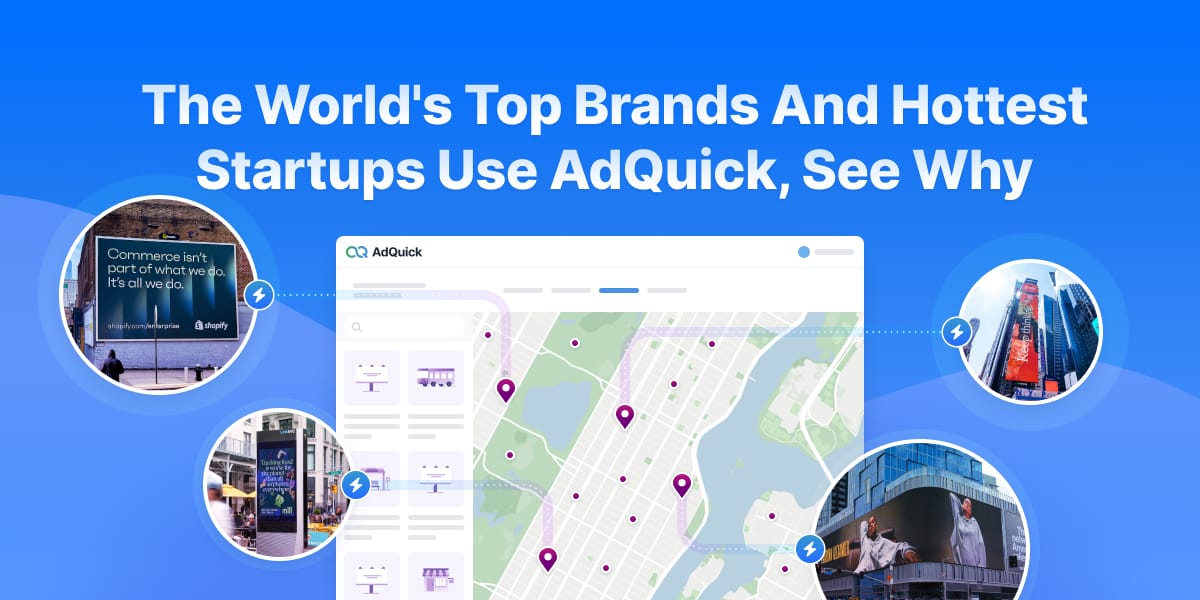
With AdQuick, executing Out Of Home campaigns is as easy as running digital ads. Plan, deploy, and measure your real-world advertising effortlessly — so your team can scale campaigns and maximize impact without the headaches.
Most people are building toward that without fully naming it. The freedom they are chasing is not just financial. It is the freedom to be selective. To turn away the things that feel wrong. To build something that reflects who they actually are rather than just what the market will pay for.
That takes time to get to and not everyone is there yet. But it is worth knowing that it exists on the other side of the early grind.
The day you can say no for the right reasons is a quiet milestone worth paying attention to.
Talk soon,